Measure Your Clicking Speed Online
Click Speed Test - Test Your Clicks Per Second
Improving mouse clicking speed can be useful for gaming, office work, editing, and many daily computer tasks. Faster clicking with better control helps save time, and using a click speed test is a simple way to measure progress. Many users enjoy testing their limits while improving hand movement and finger rhythm.It is easy to use, works online, and gives instant results within seconds.
Whether for fun or skill building, this tool is helpful for beginners as well as experienced users. Regular practice can steadily improve overall clicking speed and hand coordination.Many people use these tools during short breaks to challenge themselves. It is a quick activity that combines entertainment with useful skill practice. This is one reason why click testing tools are becoming more popular online.
What is Click Speed Test?
A click speed test is an online tool that checks how many times you can click your mouse within a selected time limit. Most tools provide timers like 1 second, 5 seconds, 10 seconds, and more. Once the timer ends, your score is shown instantly on the screen.Many users also call it a CPS test, where CPS means clicks per second.
This score is calculated by dividing total clicks by the selected duration. It gives users a simple way to compare results and monitor progress over time.The tool is useful for beginners, gamers, office workers, and anyone who wants to improve clicking speed. Since it works directly in a browser, users can start testing quickly without downloading anything.
How to Use the Click Test Tool
Using the tool is simple and beginner-friendly. First, open the page and choose the timer that suits your goal. Short timers are ideal for quick speed checks, while longer timers help test consistency and endurance.Next, place your hand comfortably on the mouse and click the start area.
As soon as the timer begins, keep clicking as fast as possible until the round ends. Your total score will appear immediately after completion.You can repeat the test several times to compare attempts. Many users improve their mouse click speed test score through short daily sessions and consistent practice.
Types of Clicking Methods
Regular Clicking
Regular clicking is the most common method used by everyday users. It involves clicking naturally with one finger while maintaining comfort and control. This style is ideal for beginners learning basic rhythm and speed.It is useful for office work, browsing, and casual gaming. While the score may be lower than advanced methods, it helps build better timing and finger stamina steadily.
Jitter Clicking
Jitter clicking uses small hand vibrations to create rapid clicks. Instead of normal tapping, users create controlled movement in the hand and arm to increase clicking speed.This method is often used by gamers who want better scores. It should be practiced carefully because overuse may cause hand discomfort during long sessions.
Butterfly Clicking
Butterfly clicking uses two fingers tapping the same mouse button one after another. This creates a fast clicking rhythm and often increases clicks per second compared to regular clicking.Many users prefer this method because it offers a balance between speed and comfort. It can help improve scores without pressing too hard.
Drag Clicking
Drag clicking involves dragging a finger across the mouse button with light pressure. Some mouse buttons register multiple clicks because of the friction created during movement.This method can generate very high click counts in some cases. However, not every mouse supports it properly, so hardware quality matters.
Benefits of Practising Click Speed Test
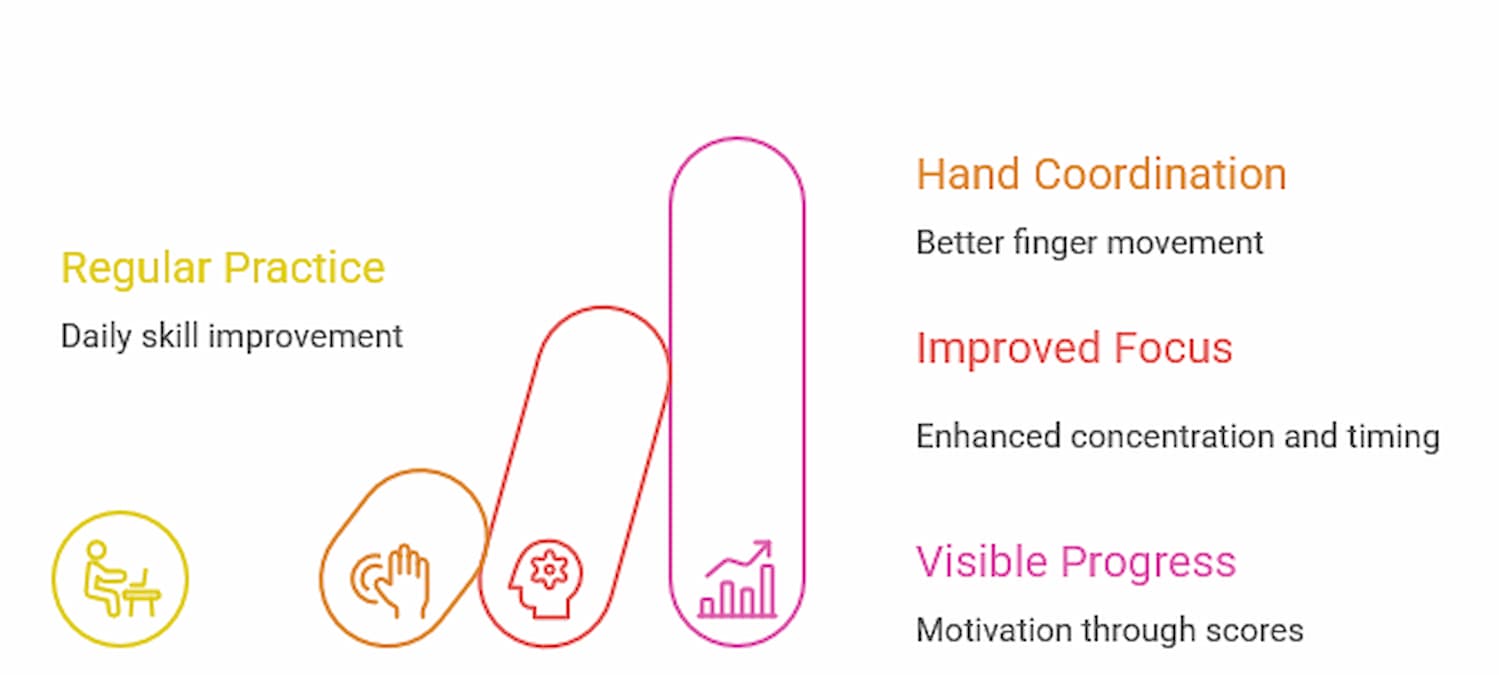
Practising regularly can improve hand coordination and finger movement. These skills are useful in gaming, editing tools, and repeated computer tasks that need constant clicking. Better control can also help reduce wasted movement.Another benefit is improved focus and timing.
Since the test needs rhythm and concentration, many users become more attentive during short daily practice rounds. This can be useful in other fast-paced tasks too.The tool also gives visible progress through scores. Repeating a click per second test weekly helps users stay motivated and track improvement easily.
What is a Good CPS Score?
Many beginners score around 5 to 7 clicks per second during short tests. This range is common for casual users and is enough for most daily tasks. It is a good starting point for anyone new to the tool.A score of 8 to 10 CPS is considered strong for many users. It shows improved rhythm, better control, and regular practice. Reaching this range often takes consistency.Advanced users may reach 12 CPS or more, depending on skill, method, and mouse quality. However, comfort should always come before chasing records.
Why Online Click Tests Are Popular
Online click tests are popular because they are free, simple, and easy to access. Users can start instantly without downloading software or creating an account. This makes them convenient for quick use anytime.They are also fun and competitive for many people. Friends often compare scores to see who has the fastest hands in short rounds. This adds excitement to every attempt.Instant results encourage users to try again and beat previous records. That quick feedback keeps users interested and motivated to improve.
Tips to Improve Your Speed
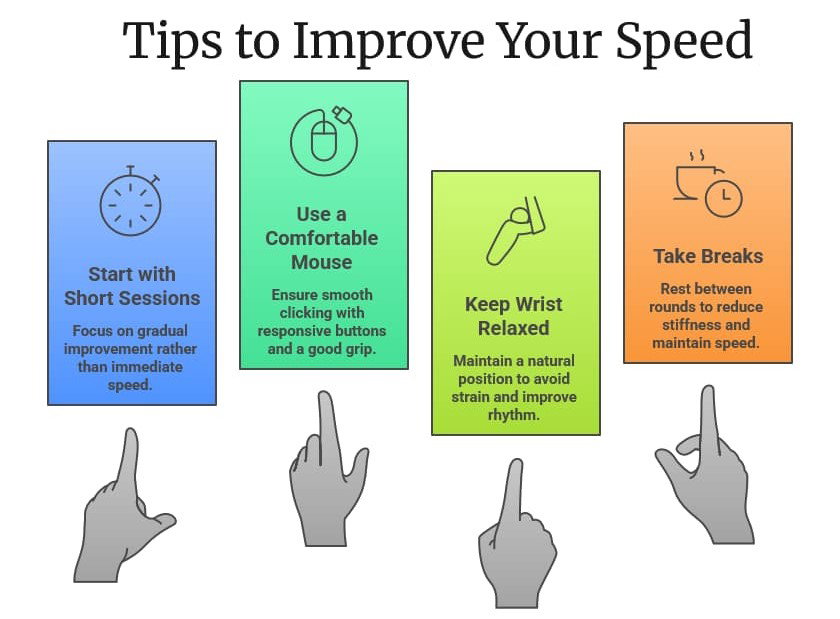
- Start with Short Practice Sessions: Begin with short clicking rounds instead of long heavy sessions. Slow and steady improvement works better than forcing speed in one day.
- Use a Comfortable Mouse: Choose a mouse with responsive buttons and a good grip. Smooth clicking makes practice easier and more consistent.
- Keep Your Wrist Relaxed: Maintain a natural wrist position and avoid pressing too hard. Fast clicking depends more on rhythm than force.
- Take Breaks Between Attempts: Rest for a short time after each round. Small breaks help reduce stiffness and keep speed steady.
Common Mistakes to Avoid
Many users focus only on speed and forget control. Random aggressive tapping often breaks rhythm and lowers the final score. Smooth clicking usually gives better results.Another common mistake is poor posture during practice. Sitting awkwardly or bending the wrist too much can create discomfort after several rounds. Keep your hand relaxed and supported.Comparing yourself with advanced users too early can reduce motivation. Focus on personal progress in every mouse speed test attempt instead of pressure.
Learn More About Mouse Basics
Understanding how a mouse works can improve your clicking habits and overall control. Learning about button response, grip styles, and movement helps you click faster and more accurately. These basics form the foundation for better performance.You can explore more about computer mouse history and design in this computer mouse guide. Gaining deeper knowledge of how a mouse functions helps you use it more efficiently.
It also improves your consistency over time.Learning the fundamentals of your device makes practice more effective and structured. A proper setup combined with good technique leads to smoother movement and better clicking results. Over time, this results in improved speed.
Frequently Asked Questions
How fast can I click?
Most beginners score around 5 to 7 clicks per second in short tests. With regular practice and better timing, many users can reach 8 to 10 CPS comfortably. Advanced users may score even higher depending on method and mouse quality.
How can I improve click speed?
Practice daily in short sessions and focus on smooth rhythm instead of force. Learning methods like butterfly clicking or jitter clicking can also help improve results. Consistency matters more than overtraining.
How do I test mouse clicking speed?
Open the tool, choose a timer, and start clicking when the round begins. Continue until time ends, then check your final score instantly. Repeat a few rounds to compare results.
Which clicking method is best?
There is no single best method for everyone. Regular clicking suits beginners, butterfly clicking balances speed and comfort, while jitter clicking may help advanced users. Choose the method that feels natural.
Conclusion
A click speed tool is more than just a simple fun game. It helps improve finger control, focus, mouse handling, and overall clicking speed through regular practice. Many users also enjoy tracking progress with higher scores.
Use safe methods, stay comfortable, and practice consistently to improve over time. Small daily sessions usually give better results than long, heavy practice rounds.Whether for gaming or daily tasks, a click speed test is a smart and simple way to measure progress anytime.
